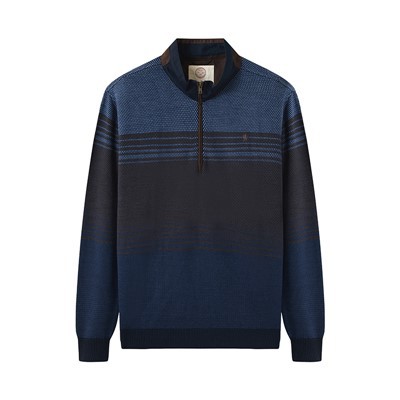
Product Overview
This men's ribbed knit pullover is developed for fall and winter programs that require heavier cotton knitwear with a clear surface structure. The garment uses a mid-gauge ribbed knitting pattern that creates vertical lines across the entire body, giving the sweater a firm visual texture while maintaining natural flexibility.
The piece is produced using 100% cotton yarn and finished with a controlled stone-wash process. This washing treatment softens the fabric and introduces a subtle faded appearance that gives the sweater a slightly worn-in look. The washed effect also helps reduce stiffness often associated with heavier cotton knit garments.
Yarn and Fabric Characteristics
The standard material used for this style is 100% cotton yarn. Cotton is selected primarily for breathability and natural touch, which helps improve comfort when the garment is worn for extended periods.
Compared with blended yarn sweaters, pure cotton knitwear tends to have a denser hand feel and a more structured drape. To prevent the fabric from becoming overly rigid, the garment undergoes a post-knitting washing process that relaxes the fiber structure and improves overall softness.
For buyers requiring different cost or performance targets, alternative yarn constructions can also be arranged, including cotton-acrylic blends or recycled cotton yarns used in sustainable product lines.
Knit Construction and Visual Structure
The garment structure is based on a continuous vertical rib pattern running from shoulder to hem.
Unlike decorative cable knits or patterned jacquards, this structure focuses on evenly spaced vertical channels that give the fabric a clear directional texture. The rib pattern helps maintain the sweater's shape while allowing moderate stretch during wear.
Key structural elements include:
- ribbed neckline for collar recovery
- ribbed cuffs to stabilize sleeve openings
- ribbed bottom hem to maintain garment shape
The front and back panels use the same rib configuration to maintain visual consistency across the entire garment. No embroidery, appliqués, or decorative hardware are added, allowing the knit structure itself to define the design.
Washing Process and Texture Development
A controlled washing process is applied after garment assembly to achieve the final appearance and fabric softness.
During washing, garments are processed using a mild enzyme or stone-wash cycle. The washing stage usually runs for 45 to 60 minutes at a controlled temperature range, allowing the cotton fibers to relax without damaging the knit structure.
This process produces several functional effects:
- reduces surface stiffness in heavy cotton knitwear
- creates a slightly faded tone variation across the garment
- improves the overall hand feel
Because ribbed fabrics react differently to washing compared with flat knit fabrics, washing parameters are standardized to maintain stable visual results between batches.
Bulk Production Control
To ensure stable results during large-scale production, several control steps are used throughout manufacturing.
During knitting, the rib pattern program and needle arrangement are fixed in the machine memory so that every production run reproduces the same stripe width and spacing.
Yarn lots are recorded before knitting begins to reduce visible shade variation between garments produced in the same order. This is particularly important for washed cotton garments, where color differences may become more noticeable after finishing.
After washing, garments are dried and then passed through a medium-temperature steam shaping stage. This helps the rib channels recover their original structure and prevents distortion caused by washing.
Finished pieces undergo full visual inspection before packaging to confirm that the rib lines remain straight and that washing results are consistent across the batch.
Customization Options
This ribbed cotton sweater can be adapted for different OEM and private label knitwear programs.
Possible customization options include:
- adjustment of rib width or stripe density
- alternative yarn compositions
- color development based on Pantone references
- modification of knitting gauge for lighter or heavier fabric
Brand labels, hang tags, and retail packaging can also be integrated according to buyer requirements.


FAQ
Q: 1. Why is stone washing used for this cotton ribbed sweater?
A: Stone washing helps soften the surface of heavy cotton knit fabrics and reduces the stiffness that can appear in dense rib structures. The process also creates a slightly faded tone variation, which gives the garment a more natural worn-in appearance while maintaining the strength of the yarn.
Q: 2. Does the rib structure affect the flexibility of the garment?
A: Yes. Rib knitting naturally provides horizontal stretch because of its alternating knit and purl structure. This allows the sweater to adapt to body movement more easily compared with flat knit constructions while still maintaining a structured vertical appearance.
Q: 3. How do you maintain consistent rib alignment during large production runs?
A: The knitting program and needle arrangement are fixed before bulk production begins. This ensures the width and spacing of the vertical ribs remain consistent across all garments within the same order, even when production is divided into multiple batches.
Q: 4. Is heavy cotton knitwear suitable for long-term retail programs?
A: Heavy cotton sweaters are often used in stable product lines because cotton yarn provides durability and predictable washing performance. With proper finishing and shrinkage control, these garments can maintain their structure through repeated washing cycles.
Q: 5. Can the washing effect be adjusted for different visual results?
A: Yes. The intensity of the washing effect can be modified by adjusting washing time, enzyme concentration, or stone quantity. This allows manufacturers to produce either a more subtle faded appearance or a stronger vintage-style wash depending on brand requirements.
Q: 6. What types of brands usually choose this style of ribbed sweater?
A: This type of sweater is commonly used by casual menswear brands, outdoor-inspired apparel labels, and retailers that require durable cotton knitwear for autumn and winter collections.
Hot Tags: men ribbed knitwear, China men ribbed knitwear manufacturers, suppliers