

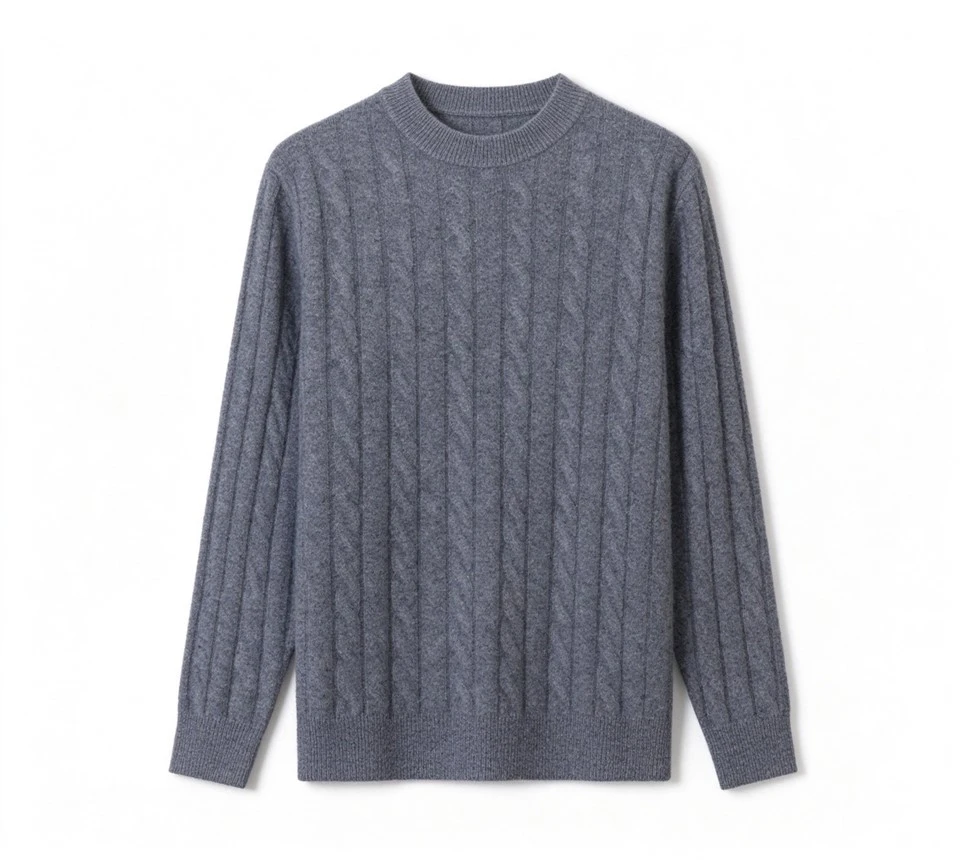


Suitable Applications & Styling
1. Premium Heritage Menswear Collections
The pronounced vertical cable pattern and classic mock neck make this sweater suitable for heritage-inspired men's collections. It can be positioned alongside traditional knitwear pieces with an emphasis on material quality and recognizable construction details.
2. Luxury Natural Fiber Knitwear Lines
The 100% cashmere composition provides a strong foundation for collections centered on premium natural fibers. Buyers can use this style as part of a coordinated cashmere assortment featuring refined winter essentials.
3. Elevated Smart-Casual Menswear
The carbon grey color and structured knit texture work well with tailored trousers, wool coats, and understated winter accessories. This direction is suitable for brands developing more sophisticated casual clothing.
4. Premium Autumn and Winter Retail Programs
The substantial knitted appearance and warm natural fiber positioning make the design relevant to seasonal men's knitwear ranges. It can serve as a statement cable-knit style within an autumn and winter product assortment.
5. Private Label Designer Knitwear Collections
The distinctive cable arrangement offers brands a recognizable design feature for private label development. Buyers can use the overall construction as a reference for creating coordinated styles with their own material, color, and design specifications.
Manufacturing Capabilities – Selection Options
1. Complex Cable Pattern Development: KAIDA can develop cable-knit structures based on buyer references, design drawings, or approved samples. During development, attention is given to the arrangement of raised cable sections, the relationship between wider textured areas, and the overall visual rhythm of the garment. This is particularly relevant to designs where the cable pattern is the main product feature.
2. Cashmere Yarn Development Coordination: Cashmere knitwear requires clear material specifications before sampling and production. KAIDA can coordinate yarn selection and development discussions according to the buyer's requested composition, color direction, and intended garment appearance. Material references can be retained to support subsequent sample reviews and production communication.
3. Mock Neck Structure Development: The mock neck is an important visual and functional element of this design. During sample development, its height, circumference, and relationship with the upper garment structure can be reviewed to establish the intended neckline proportion. This helps reduce discrepancies between the design reference and the approved sample.
4. Textured Knit Panel Development: Raised cable patterns and broader textured sections require careful consideration during knitted panel development. KAIDA can coordinate the panel construction according to the approved design reference, with attention to the placement and continuity of the knitted structures.
5. Knit Panel Linking and Garment Assembly: After the knitted panels are produced, linking and sewing processes are used to assemble the garment. Attention to panel alignment and joining helps preserve the intended cable pattern arrangement and overall garment shape.
6. Garment Weight and Proportion Review: For substantial cashmere sweaters, garment weight should be considered together with the overall proportions and construction. Sample review can help assess whether the finished garment reflects the intended design direction and provides a suitable reference for bulk production.
7. Cable Pattern Alignment Review: Prominent cable structures are highly visible design features. During sample and production review, the alignment and presentation of these patterns can be checked across relevant garment sections to help maintain a coherent overall appearance.
8. Premium Knitwear Sample Management: KAIDA can coordinate sample references, approved design details, yarn information, and construction requirements throughout product development. Keeping these details organized helps buyers communicate revisions more clearly and establish a more reliable reference for repeat orders.

FAQ
Q: What Makes 100% Cashmere Cable Knitwear Different from Standard Men's Sweaters?
A: 100% cashmere cable knitwear combines a premium natural fiber composition with a more dimensional knitting structure. Compared with standard plain-knit sweaters, raised cable patterns create additional visual depth and give the garment a distinctive textured appearance. The quality of the final product also depends on yarn specifications, knitting consistency, garment construction, and finishing. For premium men's collections, these elements work together to establish the sweater's overall character and retail positioning.
Q: What Should Buyers Check When Developing a Men's Mock Neck Cashmere Sweater?
A: Buyers should pay particular attention to the height, circumference, and overall proportions of the mock neck. The neckline should complement the body proportions and cable pattern without appearing excessively tight or visually overwhelming. During sample evaluation, brands should also check neckline comfort, opening dimensions, shape retention, and how the collar sits when worn. These details help determine whether the design meets the expectations of the intended customer group.
Q: How Does Cable Pattern Complexity Influence the Sweater's Overall Appearance?
A: Cable pattern complexity plays an important role in defining the visual identity of a knitted garment. Larger raised cables create a stronger dimensional effect, while the spacing and arrangement of individual patterns influence the overall rhythm and balance. In this design, prominent vertical cables are combined with wider textured sections to create a structured, heritage-inspired appearance. Buyers should review cable definition, spacing, alignment, and pattern consistency when approving samples.
Q: How Can Buyers Assess Cashmere Yarn Quality Before Sample Approval?
A: Fiber composition alone does not provide a complete picture of cashmere yarn quality. Buyers should review available yarn specifications, including fiber fineness, yarn count, yarn construction, color consistency, and suitability for the intended knitting structure. These factors can influence the surface appearance, handle, and definition of the cable pattern. Comparing yarn information with the physical sample helps brands establish a clearer material reference before bulk production.
Q: How Can Color Consistency Be Maintained in Carbon Grey Cashmere Knitwear?
A: Color consistency should be evaluated throughout yarn preparation, sample development, and bulk production. Buyers should establish an approved color reference and check that knitted panels show a consistent shade under different lighting conditions. Dark shades such as carbon grey also require careful visual inspection for surface irregularities, loose fibers, and finishing marks. Reviewing the finished garment under both natural and controlled lighting can help identify differences before shipment approval.
Q: Which Specifications Have the Greatest Impact on Cashmere Sweater Development Costs?
A: Several specifications can influence the development and production cost of a cashmere sweater, including yarn selection, gauge, garment weight, cable-pattern complexity, dimensions, and finishing requirements. More elaborate cable arrangements may require additional knitting development and closer pattern control. Buyers should distinguish between essential design features and adjustable details when preparing a Tech Pack. Clear specifications make it easier to evaluate supplier quotations and identify potential adjustments without changing the garment's defining appearance.
Hot Tags: private label men's vertical cable mock neck cashmere sweater factory, China private label men's vertical cable mock neck cashmere sweater factory manufacturers, suppliers


