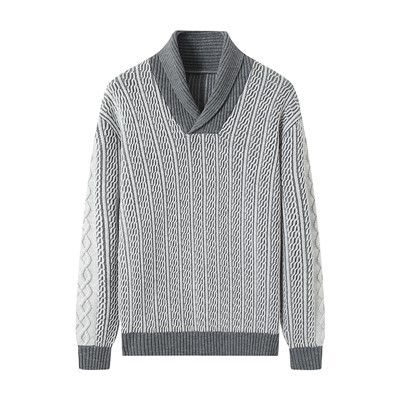
Industry Challenge or Buyer Pain Point
Fashion brand owners and apparel buyers often face inconsistent quality, delayed sampling, and rigid minimum order quantities (MOQs) when sourcing custom half zip sweater production. Private label brands struggle with mismatched sizing standards, limited material flexibility, and unclear communication during OEM development - especially for technical knitwear like Knitwear > Hooded Sweaters > Men's Sweater Zip Hoodie. Without clear alignment on customization scope and manufacturing process transparency, procurement cycles extend, seasonal deadlines slip, and brand integrity risks increase.


Understanding the Product Category
The Men's Sweater Zip Hoodie sits within the precise category Knitwear > Hooded Sweaters > Men's Sweater Zip Hoodie - a functional hybrid that bridges casual streetwear appeal with structured knitwear performance. For fashion brands, it enables seasonal capsule collections with consistent silhouette and branding flexibility. Private label collections leverage its clean zip-up structure for logo placement and fit differentiation. In retail apparel, standardized sizing (S–5XL) supports omnichannel inventory planning. Within seasonal knitwear collections, its polyester base allows rapid dye-lot consistency across colorways. And for OEM knitwear manufacturing, the style's repeatable construction supports scalable production without compromising design intent.
Key Customization Options
Material Options
The standard specification uses 100% polyester, offering durability, shape retention, and consistent dye uptake - critical for multi-color private label programs. Material customization is available upon request, allowing alignment with brand-specific sustainability or performance goals.
Knitting Techniques
As a knitwear item, the Men's Sweater Zip Hoodie relies on stable gauge and tension control to maintain hood shape, zipper alignment, and sleeve drape. While specific knitting methods are not specified in the product brief, customization capability implies adaptability to common circular or flat-knit structures used in mid-weight hooded sweaters.
Sizes
Standard sizing spans S to 5XL, supporting inclusive retail ranges. Customized sizing is supported - essential for brands targeting specific regional fit expectations or extended-size markets.
Labels & Packaging
OEM and private label manufacturing includes full branding integration: woven labels, heat-transfer logos, custom hangtags, and retail-ready packaging. No assumptions are made about label placement or packaging format beyond this scope - all details are confirmed during design review.
OEM and Private Label Manufacturing Process
Collaboration follows a defined sequence aligned with industry-standard knitwear development:
Design Review: Technical package evaluation, including measurements, stitch density, zipper type, and seam finish requirements.
Sampling: Prototype development based on approved spec sheet; fabric swatches and trim samples provided for confirmation.
Material Confirmation: Final approval of base fabric, dye lot, and accessory components before bulk production begins.
Production: Execution against agreed timeline, with progress updates tied to key milestones (cutting, knitting, assembly, finishing).
Quality Inspection: In-line and final AQL-based checks covering dimensional accuracy, stitching integrity, color consistency, and functional elements (e.g., zipper operation).
Packaging: Brand-aligned packing per agreed instructions - from polybag sealing to master carton labeling.
How to Choose a Reliable Manufacturer
Selecting the right half zip sweater manufacturer hinges on verifiable capability - not claims. Start by evaluating these five decision criteria:
MOQ Transparency: Confirm whether MOQ applies per style, color, or size variant - and whether it adjusts for repeat orders or long-term partnerships.
Lead Time Clarity: Ask for documented timelines per phase (sampling, production, shipping), including buffer allowances for fabric sourcing or customs clearance.
Quality Control Protocol: Request inspection checklists and sample reports - not just certification statements. Consistent execution matters more than certificate names.
Communication Cadence: Identify who manages your account (technical developer vs. sales coordinator) and how updates are delivered (shared portal, weekly syncs, shared docs).
Customization Scope: Verify which elements are truly adjustable - e.g., whether 100% polyester can be substituted, if S–5XL includes graded pattern files, and how branding is integrated into cut-and-sew workflow.
A capable custom knitwear factory will align with your operational rhythm - whether you're launching a limited-edition men's half zip sweater drop or scaling a full-season fashion knitwear supplier partnership.
Recommended Products
The Men's Sweater Zip Hoodie is designed for brands requiring dependable execution across OEM half zip sweater and private label knitwear manufacturer workflows. Its Zip-Up Sweater with Hood style supports consistent fit across S–5XL, while 100% polyester ensures color fidelity and production repeatability - ideal for fashion brands building cohesive seasonal knitwear collections or retailers expanding inclusive size offerings.
FAQ
Q: Can the Men's Sweater Zip Hoodie be customized?
A: Yes. Color, size, material, and branding can be customized according to customer requirements.
Q: What size range is available?
A: The Men's Sweater Zip Hoodie is available from S to 5XL and supports customized sizing.
Q: What materials are available?
A: The standard material is 100% polyester, and customized material options are available upon request.
Conclusion
Choosing the right knit sweater manufacturer means prioritizing clarity over convenience - especially for technical items like the Men's Sweater Zip Hoodie. Focus on partners who define customization boundaries, document process steps, and align lead times with your go-to-market calendar. Request samples to validate fit and finish. Discuss your project with specificity around size grading, material substitution, and labeling needs. Learn more about manufacturing options through direct technical dialogue - not generic brochures.