Industry Challenge & Buyer Pain Point
For fashion brands, private label startups, and apparel buyers, sourcing multicolor striped sweaters involves more than selecting an attractive color combination. Buyers need to evaluate whether a supplier can translate a design concept into consistent stripe placement, stable fit, suitable garment weight, and repeatable production across multiple sizes. Common sourcing risks include unclear customization limits, inconsistent color appearance between samples and bulk production, fit variation across size grading, and production delays that can disrupt seasonal launch schedules.
These challenges become more important when the design combines multicolor stripes, textured knitting, and a relaxed silhouette. A visually simple striped sweater can require careful coordination between yarn selection, stripe proportion, garment construction, and finishing. For brands developing private label knitwear, the sourcing decision should therefore focus on both design flexibility and manufacturing consistency.
Understanding the Product Category
The Custom Knitwear > Women Sweaters > Crew Neck Sweaters category is widely used in autumn and winter collections because it provides a versatile base for color, texture, and fit customization. For private label brands, a crew neck sweater can be differentiated through yarn choice, stripe layout, rib structure, garment weight, and silhouette rather than relying only on decorative details.
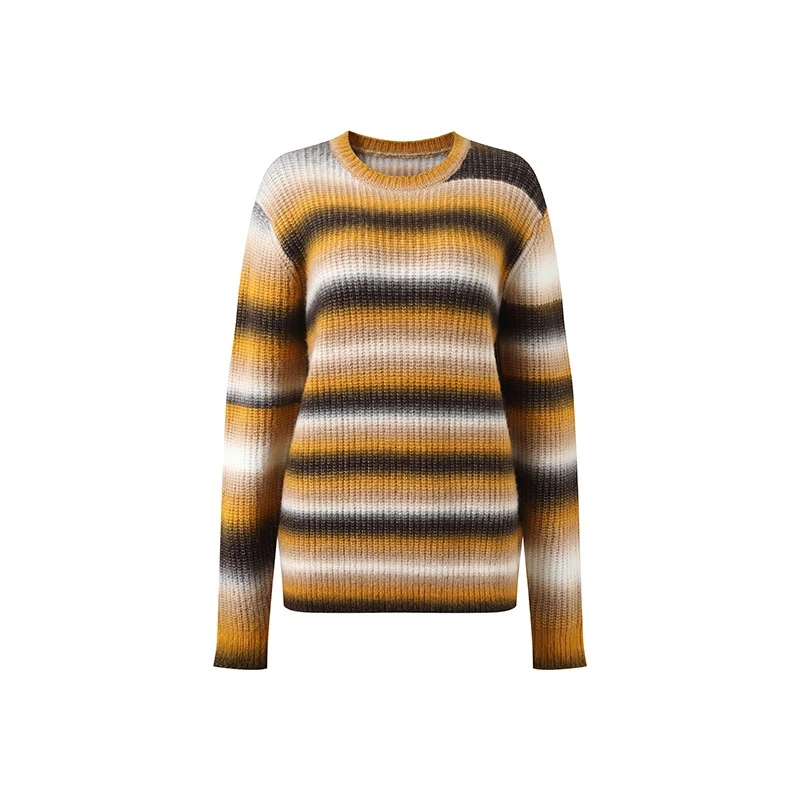
The reference Multicolor Striped Knit Sweater combines horizontal ombre gradient stripes, allover chunky ribbing, a crew neckline, long sleeves, and a relaxed/oversized fit. The reference version uses 100% acrylic, weighs approximately 412g, and is available in standard sizes from XS–3XL. Color, size, and material can also be customized for different private label projects.

Key Customization Options for Private Label Collections
Material Selection
The reference style uses 100% acrylic, which provides a practical starting point for a heavyweight fashion knit. For OEM development, however, material choice should be evaluated according to the target retail price, hand feel, seasonal positioning, care requirements, and overall collection concept.
Because the product page confirms that material can be customized, brands can discuss alternative yarn compositions with the manufacturer based on their project requirements. Rather than selecting a fiber only by price, buyers should consider how a change in yarn may affect weight, texture, drape, color appearance, and the definition of the ribbed structure.
Stripe Color and Layout
Multicolor striped knitwear requires more design planning than a single-color sweater. Buyers should define the number of colors, stripe widths, transition sequence, placement across the body and sleeves, and the overall visual balance before sampling begins.
The reference sweater uses horizontal ombre gradient stripes. For private label collections, customized color combinations can help align the product with seasonal palettes or an existing brand identity. During development, brands should provide clear visual references and confirm the approved stripe arrangement in the sample before proceeding with bulk production.
Knitting Texture and Garment Weight
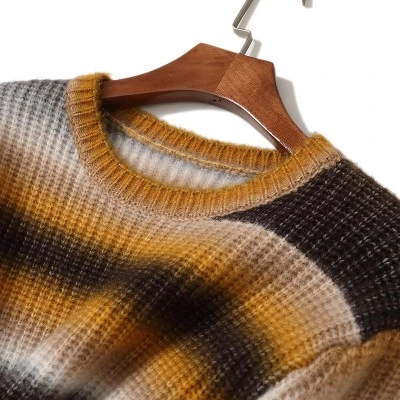
Allover chunky ribbing gives the reference sweater its structured texture and heavier visual appearance. Combined with the approximately 412g garment weight, the construction is suitable for autumn and winter-oriented collections.
When developing a custom version, buyers should review texture and weight together. Changing yarn composition, rib structure, garment dimensions, or stripe layout may influence the final hand feel and drape. A sample should therefore be evaluated as a complete garment rather than approving each specification independently.
Fit and Size Development
The reference product is designed with a relaxed/oversized fit and a standard size range of XS–3XL. Because size is customizable, fashion brands can develop measurements according to their own target market and fit standards.
For OEM projects, buyers should provide a measurement specification or clearly communicate the intended silhouette. Key measurements such as chest width, body length, shoulder width, sleeve length, cuff opening, and hem width should be reviewed during sampling. This is especially important for oversized styles, where proportion and balance matter as much as individual measurements.
What to Confirm Before Sampling
A clear product brief helps reduce unnecessary revisions during knitwear development. Before requesting a sample, fashion brands should prepare the core information that affects the final garment.
Reference design: Provide sketches, photos, or an existing garment showing the intended silhouette and stripe direction.
Color combination: Define the desired colors and indicate how the stripes should be distributed across the garment.
Material requirement: Confirm whether the reference 100% acrylic construction is suitable or whether another material should be discussed.
Target fit: Specify whether the sweater should maintain the relaxed/oversized appearance of the reference style or follow a different fit standard.
Size range: Confirm the required sizes and provide measurements if the collection uses a proprietary sizing system.
Garment details: Confirm neckline, sleeve shape, cuffs, hem treatment, rib texture, and any other visible construction details.
Providing these details early makes it easier for both buyer and manufacturer to evaluate feasibility before development begins.
OEM and Private Label Development Process
The exact workflow can vary by project, but a structured development process helps fashion brands manage multicolor knitwear more efficiently. Buyers should confirm each stage with the manufacturer rather than assuming that every supplier follows the same procedure.
Product Requirement Review: Share the design concept, target fit, material preference, color direction, size range, and other customization requirements.
Feasibility Discussion: Confirm which aspects of the reference style can be retained and which specifications need adjustment for the new collection.
Sample Development: Produce a sample so the brand can evaluate stripe placement, color combination, texture, fit, garment weight, and overall appearance.
Sample Revision: Adjust measurements, color arrangement, material, or construction details where necessary.
Final Specification Confirmation: Confirm the approved sample and the specifications that will be used as the reference for bulk production.
Bulk Production and Inspection: Production and quality requirements should follow the specifications agreed between the buyer and manufacturer.
For multicolor striped sweaters, sample approval is particularly important because color layout and garment proportions are highly visible. Buyers should avoid approving only a yarn swatch or isolated detail when the final appearance depends on the relationship between multiple design elements.
How to Evaluate a Multicolor Striped Sweater Manufacturer
Selecting a multicolor striped sweater manufacturer should involve more than comparing unit prices. For private label projects, the more important question is whether the supplier can understand the design intent and maintain consistency from development through bulk production.
Customization Scope: Confirm whether color, material, size, fit, and stripe arrangement can be adjusted according to your collection requirements.
Sampling Capability: Ask how the supplier handles sample revisions and how changes are recorded before bulk production.
MOQ Structure: Confirm whether minimum quantities are calculated by style, color combination, or another production requirement. Do not assume one MOQ applies to every variation.
Lead-Time Clarity: Request separate expectations for development, revision, material preparation, and bulk production so the project can be planned around the intended launch date.
Quality Consistency: Review how the supplier controls measurements, stripe placement, seams, ribbed areas, and overall finishing throughout production.
Technical Communication: A reliable custom knitwear manufacturer should be able to discuss practical issues such as material changes, fit adjustments, stripe proportions, and construction limitations rather than only providing quotations.
Repeat-Order Management: For styles that may be reordered, discuss how approved specifications and material information are maintained so future production can remain consistent with the original collection.
Quality Points to Check on a Striped Knit Sweater
For brands sourcing a custom striped sweater, quality inspection should focus on both general knitwear construction and pattern-specific details. The following checkpoints are particularly relevant:
Stripe placement: Check whether the overall stripe sequence matches the approved sample and whether the visual balance is consistent across garments.
Color consistency: Compare production garments against the approved reference and review visible differences between panels where relevant.
Fit measurements: Verify key dimensions against the approved size specification, especially for relaxed and oversized silhouettes.
Rib structure: Check the crew neck, cuffs, hem, and allover rib texture for even appearance and appropriate recovery.
Seaming and finishing: Inspect joins, loose yarns, distortion, and other visible finishing issues that could affect presentation.
Overall garment balance: Evaluate the sweater as a complete product, including drape, symmetry, sleeve proportion, and how the stripes interact with the final fit.
Recommended Product Reference
The Multicolor Striped Knit Sweater provides a useful reference for brands developing private label women's knitwear with bold color, visible texture, and a relaxed silhouette.
The reference design features 100% acrylic, an approximately 412g garment weight, horizontal ombre gradient stripes, allover chunky ribbing, a crew neck, long sleeves, and a relaxed/oversized fit. Standard sizing runs from XS–3XL, while color, size, and material can be customized for specific OEM projects.
Brands can use this style as a starting point when discussing their own stripe combinations, sizing requirements, materials, and collection direction with a women's sweater manufacturer.
FAQ
Can multicolor striped sweaters be customized for private label collections?
Yes. The reference product supports customization of color, size, and material, allowing fashion brands to develop versions suited to their own private label collections.
What material is used for the reference multicolor striped sweater?
The reference style uses 100% acrylic and has a product weight of approximately 412g. Material can also be customized according to project requirements.
What sizes are available?
The standard size range is XS–3XL. Customized sizing can also be discussed for OEM and private label projects.
Can fashion brands customize the stripe colors?
Yes. Color is customizable, so brands can develop stripe combinations that better match their seasonal palette or collection concept.
What should buyers check before approving a striped sweater sample?
Buyers should review stripe placement, color combination, material feel, garment weight, measurements, fit proportions, rib structure, and overall appearance. For multicolor knitwear, evaluating the complete garment is more useful than approving individual design elements in isolation.
What information should a brand send when requesting an OEM quotation?
A useful inquiry should include the reference design, required quantity, preferred material, target colors, size range, measurement specification if available, intended fit, and expected delivery schedule. Providing clear project information helps the manufacturer evaluate customization requirements more accurately.
Conclusion
Sourcing multicolor striped sweaters for a private label collection requires coordination between design, material, color, fit, and production requirements. The strongest sourcing decisions are based not only on price, but also on how clearly a manufacturer can translate the approved design into consistent bulk production.
For brands developing autumn and winter knitwear, start by defining the stripe layout, material direction, target silhouette, and size specifications. Then use sampling to evaluate how these elements work together before confirming bulk production.
If you are developing a custom striped sweater collection, the Multicolor Striped Knit Sweater can serve as a practical reference style for discussing customized color, size, material, and OEM knitwear development requirements with KDA Apparel.