Industry Challenge or Buyer Pain Point
Procuring custom kids sweaters often stalls at the supplier selection stage. Sourcing managers and brand founders face inconsistent quality, unclear compliance documentation, inflexible MOQs, and delayed sampling - especially when balancing safety, seasonal performance, and private label differentiation. Unlike adult knitwear, children's garments require stricter material safety protocols, precise sizing across growth stages (4T–14T), and construction that withstands daily wear without compromising softness.


Understanding the Product Category
The category Kids Sweater > Custom Kids Knitwear reflects a functional and strategic classification-not just a product type. For children's fashion brands, it signals alignment with age-appropriate fit, seasonally adaptive layering (Spring, Autumn & Winter), and scalable production for school wear, retail private labels, or seasonal collections. In wholesale children's apparel, this category enables consistent SKU logic across size ranges and material options - supporting both casual wear lines and coordinated kidswear collections without re-engineering base patterns.
Key Customization Options
Material Options
Cotton, wool, acrylic, polyester, nylon, spandex - and custom blends - are available to meet specific performance needs: cotton for breathability in transitional seasons; wool-acrylic blends for warmth and machine-wash durability; spandex-infused knits for active wear flexibility. All materials comply with CPSIA and OEKO-TEX® requirements for child-safe dyes and low heavy-metal content.
Knitting Techniques & Styles
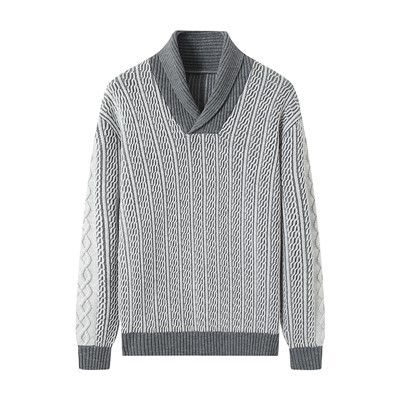
From classic Crew Neck and V-Neck pullovers to textured Cable Knit, functional Hooded, and detail-oriented Embroidered styles, each technique supports distinct use cases - e.g., cable knit for autumn school uniforms, hooded styles for casual outer-layer appeal, short sleeve knits for layered spring styling.
Sizes
Standard sizing spans 4T–14T, fully customizable to match brand-specific grade rules or regional fit expectations. Size runs can be adjusted per style to accommodate growth curves, fabric recovery, or target age segmentation (e.g., toddler vs. pre-teen proportions).
Labels & Packaging
Private label services include woven or printed neck labels, care tags, and custom packaging - all aligned with retailer requirements and compliance labeling standards. Labels are securely attached with reinforced stitching to prevent choking hazards.
Quality Focus
Every garment prioritizes three non-negotiable attributes: softness (tested via hand-feel evaluation and fiber fineness), durability (reinforced seams at high-stress points), and child-safe construction (no loose threads, secure embroidery, snag-resistant finishes).
OEM and Private Label Manufacturing Process
A structured OEM/ODM workflow ensures clarity and control:
Design Review: Technical sketches, stitch density specs, and seam placement confirmed against brand guidelines.
Sampling: Pre-production samples include fabric swatches, stitch tension reports, and fit validation on standard 4T–14T size blocks.
Material Confirmation: Lab dip approval for color consistency and fiber composition verification prior to bulk knitting.
Production: Batch tracking by style, size, and material lot to maintain traceability.
Quality Inspection: AQL 2.5 inspection covering seam strength, dimensional stability, colorfastness, and compliance labeling.
Packaging: Final units packed per brand specifications - polybagged with hangtags, boxed for retail, or bulk-packed for wholesale distribution.
How to Choose a Reliable Manufacturer
Selecting a kids sweater manufacturer requires evaluating capability beyond price or lead time. Start with these procurement criteria:
MOQ Flexibility: A true children's knitwear manufacturer offers tiered MOQs - typically 100–200 pieces per style - based on yarn complexity and customization depth, not fixed minimums.
Lead Time Transparency: Clear timelines for sampling (3–4 weeks), production (8–12 weeks), and compliance documentation delivery reduce planning risk.
Quality Control Integration: Look for documented inspection checkpoints - not just final QA - including raw material testing, in-process seam audits, and post-dye lab verification.
Communication Protocol: Dedicated project coordination, shared digital tech packs, and bilingual support streamline cross-border sourcing.
Customization Capability: A qualified OEM kids sweaters partner confirms feasibility early - e.g., whether a requested embroidery motif meets CPSIA stitch-density thresholds or if a custom blend maintains pilling resistance.
Supply Chain Stability: Consistent access to certified yarns, in-house knitting capacity, and compliance-ready documentation ensure continuity across seasonal orders.
A children's sweater supplier that aligns with your operational rhythm - not just your aesthetic - becomes a long-term extension of your product development team.
Recommended Products
The Kaida Custom Kids Sweater Collection is designed for brands launching custom kids sweaters across multiple applications: children's fashion brands building cohesive seasonal knitwear collections; retailers developing school and casual wear private labels; and wholesalers sourcing compliant, size-flexible private label kids knitwear. With sizes from 4T–14T, material options spanning cotton to custom blends, and full OEM/ODM support - including pattern, embroidery, and label customization - it addresses core procurement challenges without requiring upfront infrastructure investment.
FAQ
What is the MOQ for custom kids sweaters?
Kaida Apparel supports flexible custom knitwear production, with typical starting quantities of approximately 100–200 pieces per style depending on yarn, design and customization requirements.
Can you manufacture private label kids sweaters?
Yes. Kaida Apparel supports OEM and private label kids knitwear, including customization of yarn, material, color, sizing, patterns, embroidery, labels and packaging.
What materials are suitable for children's sweaters?
Common options include cotton, wool, acrylic, polyester and blended yarns. The appropriate material depends on season, target price, softness, durability, care requirements and the intended market.
Conclusion
Choosing the right kids sweater factory means matching your brand's operational needs - not just its design vision - with a partner who understands the technical, regulatory, and logistical nuances of Custom Kids Knitwear. Prioritize transparency in sampling, consistency in compliance, and adaptability in customization. Request samples to evaluate hand-feel and construction firsthand, discuss your project to confirm alignment on sizing and seasonality, or learn more about manufacturing options tailored to your launch timeline and scale.