Industry Challenge or Buyer Pain Point
Fashion brand owners and sourcing managers often face inconsistent sampling timelines, inflexible MOQs, and limited material or fit customization when partnering with a women's knitwear manufacturer. For private label companies launching seasonal women's knitwear collections, delays in sample approval or misaligned quality expectations can push launch dates - and erode margin confidence. These are not abstract risks; they're operational bottlenecks rooted in mismatched capabilities between brand needs and factory specialization.


Understanding the Product Category
Women's Knitwear, Women's Sweaters, Women's Cardigan Sweaters, and Custom Knitwear are not interchangeable terms in procurement - they signal distinct design intent, production complexity, and market positioning. A Women's Cardigan Sweater, for example, requires precise stitch definition for button bands, consistent tension across open-front silhouettes, and structural integrity in oversized or cropped proportions. For fashion brands and designer collections, this category delivers versatility across seasons - lightweight cotton knits for spring, wool-mohair blends for fall layering, and acrylic-nylon mixes for accessible retail pricing. Retailers rely on Custom Knitwear to align with seasonal color stories and size curves (XS–3XL), while private labels use it to build cohesive, tactile brand identities - not just garments.
Key Customization Options
Material Options
Cotton offers breathability and ease of care; wool provides natural insulation and drape; mohair adds halo and volume; acrylic and nylon contribute strength and cost efficiency; blended yarns balance performance, feel, and price. Material selection directly affects hand feel, pilling resistance, and seasonal relevance - all critical for custom women's knitwear.
Knitting Techniques
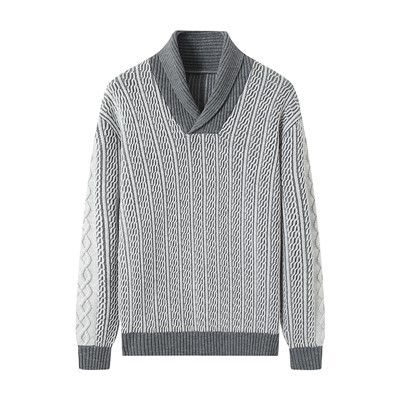
Knit structures define visual texture and functional behavior: ribbing for elasticity at cuffs and hems, cable or waffle patterns for dimensionality, and openwork for airflow. These are adjustable per style - whether a V-neck cardigan or textured open-front silhouette - and influence both sampling accuracy and bulk consistency.
Sizes
Sizing is fully customizable across XS–3XL. This supports inclusive retail strategies and regional fit preferences without requiring separate grading runs - essential for private label knitwear scaling across markets.
Labels & Packaging
Custom hangtags, woven labels, and polybag specifications are integrated into the OEM workflow. No pre-set branding - only what your brand specifies.
Private Label Services
OEM/ODM support includes full technical package review, pattern adaptation, and spec sheet alignment. There is no 'off-the-shelf' baseline - every OEM women's sweater begins from your design direction or co-developed brief.
OEM and Private Label Manufacturing Process
A repeatable, transparent process reduces uncertainty:
Design Review: Technical evaluation of stitch count, gauge, seam placement, and trim compatibility.
Sampling: One pre-production sample using confirmed yarn and construction - reviewed for fit, drape, and detail execution.
Material Confirmation: Lab dip and physical yarn swatch sign-off prior to bulk sourcing.
Production: Batch tracking by style, size, and color. No cross-style material pooling.
Quality Inspection: In-line checks during knitting and finishing; final AQL-based inspection pre-packaging.
Packaging: Fulfilled per brand-specified carton count, folding method, and labeling.
How to Choose a Reliable Manufacturer
When evaluating a knitwear factory China or global partner, prioritize evidence of capability over claims. Ask: Does the factory specialize in women's sweater manufacturer workflows - or treat knitwear as a subset of woven production? Can they confirm yarn sources for wool, mohair, or blended options - not just list them? Is MOQ structured per style or aggregated across categories? Are lead times quoted per stage (sampling, production) - not as a single 'total' figure? For private label knitwear, verify if label integration, size grading, and trim sourcing are included in scope - not added as change orders. Communication responsiveness during sampling reflects long-term supply chain stability. A reliable women's knitwear manufacturer answers these questions with specificity, not generalizations.
Recommended Products
The Women's Cardigan Sweater – Custom OEM/Private Label Knitwear is designed for fashion brands and private label companies needing flexibility across materials, sizing (XS–3XL), and knit structure - from cropped cotton ribs to oversized wool-mohair open fronts. It supports seasonal women's knitwear collections with consistent execution across V-neck, button-through, and textured variants. This style addresses common pain points: fit inconsistency across sizes, limited yarn option depth, and rigid MOQs - by building customization into the core production model.
FAQ
Q: What should fashion brands look for in a women's knitwear manufacturer?
A: Evaluate knitwear specialization, yarn sourcing, sampling capability, quality control, customization options, production capacity, MOQ flexibility and experience with private label manufacturing.
Q: Can women's sweaters be customized for private label brands?
A: Yes. Women's knitwear can be customized in materials, colors, sizing, knit structures and design details, with OEM/ODM and private label production available.
Q: What materials are commonly used for custom women's knitwear?
A: Common options include cotton, wool, cashmere, mohair, acrylic, nylon and blended yarns. The right material depends on target price, season, hand feel, durability and brand positioning.
Conclusion
Selecting the right women's knitwear manufacturer means aligning technical capability with your brand's operational rhythm - not chasing lowest cost or fastest timeline alone. When your next seasonal women's knitwear collection hinges on precision in material behavior, size inclusivity, and repeatable quality, start with clarity: define your non-negotiables in sampling, customization, and communication - then match them to partners who demonstrate those capabilities consistently. Request Samples to assess yarn hand and stitch fidelity. Discuss Your Project to clarify MOQ structure and timeline staging. Learn More About Manufacturing Options to confirm alignment across materials, sizes, and private label integration.