Industry Challenge or Buyer Pain Point
Fashion brands and apparel startups often struggle to launch a private label knitwear collection without overcommitting capital or compromising quality. High MOQs, inconsistent sampling timelines, limited material transparency, and unclear private label support create friction at the sourcing stage - especially for e-commerce brands scaling from DTC to wholesale or retail chains expanding seasonal assortments. Without clear visibility into gauge options, certification standards, or export-ready compliance, procurement decisions become reactive rather than strategic.


Understanding the Product Category
Apparel & Fashion > Knitwear > Private Label Sweaters is not just a taxonomy - it's a functional category that defines how brands position authenticity, seasonality, and brand equity in competitive markets. For Fashion Brands, this category supports signature capsule collections; for Apparel Startups, it enables lean inventory entry with minimal upfront risk; Retail Chains rely on it for consistent fit and compliance across geographies; E-commerce Brands use it to differentiate through tactile storytelling, such as cashmere blend V-necks vs. cotton crewnecks; and Private Label Clothing Businesses treat it as their core SKU engine - where branding, material integrity, and repeatable production converge.
Key Customization Options
Private label knitwear development begins with precise technical alignment - not just aesthetics.
Material Options
Cotton, wool, cashmere blend, and acrylic blend are available - each selected for performance, drape, and market alignment. OEKO-TEX certified materials ensure chemical safety compliance for USA, Europe, and Australia markets.
Knitting Techniques & Gauge
Gauge directly impacts weight, texture, and end-use: 3GG for heavyweight winter layers, 5GG and 7GG for mid-weight seasonal staples, and 12GG for refined, lightweight knits. Gauge selection informs yarn consumption, cost structure, and target consumer expectations.
Sizes & Fit
OEM customization includes size grading, fit refinement, such as classic, relaxed, or tapered, and pattern adaptation - all verified during sampling.
Labels & Packaging
Private label branding support covers woven labels, printed hang tags, poly bags, and branded accessories - fully customizable per brand guidelines.
Export-Ready Compliance
The factory is BSCI audited and ships to USA, Europe, and Australia with documentation aligned to regional import requirements - reducing post-production delays.
OEM and Private Label Manufacturing Process
A structured OEM workflow ensures predictability and control:
- Design Review: Technical pack assessment - including stitch type, gauge, material spec, and branding placement.
- Sampling: Physical sample development, usually 7–15 days, using confirmed yarns and construction methods.
- Material Confirmation: Final approval of lab dips, fabric swatches, and label mock-ups before bulk production.
- Production: Transparent timeline tracking, with batch updates shared per milestone.
- Quality Inspection: In-line and final AQL-based checks - covering seam integrity, dimensional accuracy, and label consistency.
- Packaging & Shipment: Branded packaging applied pre-shipment; FOB terms coordinated per destination market.
No assumptions are made between stages - every decision point requires mutual sign-off.
How to Choose a Reliable Manufacturer
Selecting a private label sweater manufacturer demands evaluation beyond catalogs or lead times. Ask these six questions:
- MOQ Flexibility: Does the supplier offer MOQ from 100 pieces per style - with no hidden minimums by gauge or material?
- Lead Time Transparency: Are sampling and production timelines tied to concrete variables, such as yarn availability and design complexity, not vague estimates?
- Quality Control Documentation: Is inspection conducted against defined AQL levels? Are OEKO-TEX and BSCI audit reports available upon request?
- Communication Protocol: Are technical queries routed to product engineers - not just account managers?
- Customization Depth: Can they execute custom labels, hang tags, and color matching - not just logo placement?
- Supply Chain Stability: Are export markets, including USA, Europe, and Australia, part of routine operations - not one-off exceptions?
A reliable custom knitwear manufacturer aligns operational discipline with brand-building capability - enabling scalability without rework.
Recommended Products
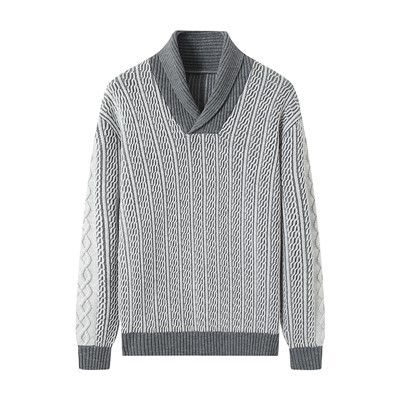
The Men's Crew Neck Sweater serves as an accessible entry point for Fashion Brands and E-commerce Brands launching their first private label knitwear line. Its classic fit accommodates broad sizing, OEM customization supports multiple yarn options, including cotton, wool, or acrylic blend, and it meets baseline compliance for all three export markets. It demonstrates how foundational styles - when built with consistent gauge control and certified materials - become repeatable assets, not one-off SKUs.
FAQ
Q: What is the MOQ for private label knitwear production?
A: Most private label knitwear projects start from 100 pieces per style, depending on yarn type, gauge, and customization requirements.
Q: Can I add my own brand labels and packaging?
A: Yes. Custom woven labels, hang tags, packaging bags, and branded accessories can be produced according to your brand requirements.
Q: How long does knitwear sampling take?
A: Sample development usually takes 7–15 days depending on design complexity, yarn availability, and construction requirements.
Q: What materials can be used for custom knitwear?
A: Common options include cotton, merino wool, cashmere blends, acrylic blends, recycled fibers, and sustainable yarns.
Conclusion
Developing a private label knitwear collection is less about finding a manufacturer - and more about identifying a partner whose technical scope matches your brand's growth stage and market ambitions. With MOQ from 100 pieces, OEKO-TEX certified materials, BSCI-audited production, and direct support for labeling and export logistics, the right knitwear OEM enables confident, iterative development - not just order fulfillment. Request samples to validate gauge, handfeel, and branding execution - or discuss your project to align on timing, materials, and compliance requirements.