Industry Challenge or Buyer Pain Point
Sourcing knitwear at the right balance of control, speed, and scalability remains a consistent challenge for brand owners and procurement teams.
Fashion brands struggle with long sampling cycles when designs are fully owned. Startup apparel businesses face MOQ barriers that limit early-season testing. Private label clothing brands often encounter misalignment between branding intent and production execution - especially in labels, packaging, and yarn consistency.
Seasonal knitwear collections demand flexibility across volumes and timelines, while retail fashion programs require reliable quality inspection before bulk shipment. Wholesalers and importers need transparent communication and stable supply chain coordination - not just lowest cost.
These pain points aren't about capacity alone. They reflect deeper gaps in how OEM and ODM knitwear manufacturing services align with operational reality.
Understanding the Product Category
Knitwear Manufacturing Services > OEM & ODM Knitwear Production is a defined service category supporting distinct brand strategies - not a generic production tier.
It enables Fashion Brands to scale signature styles without internal infrastructure. For Private Label Clothing Brands, it delivers consistent product identity through custom labels and packaging. Startup Apparel Businesses use it to validate market fit with low-risk MOQ flexibility.
Seasonal Knitwear Collections rely on rapid sampling support and bulk production handoff. Retail Fashion Programs depend on coordinated quality inspection and on-time delivery. Wholesale Apparel Distribution benefits from scalable bulk production and standardized documentation.
This category exists where design ownership meets manufacturing capability - and where decisions between OEM and ODM directly impact time-to-market, margin structure, and brand integrity.
Key Customization Options
Within Knitwear Manufacturing Services > OEM & ODM Knitwear Production, customization operates across six practical dimensions:
Material Options
Custom Yarn Selection allows precise alignment with performance, drape, and sustainability goals - whether natural fibers, blended yarns, or regenerated materials.
Knitting Techniques
From single jersey and rib knits to intarsia and jacquard, technique selection affects texture, weight, and production lead time - and is supported by both OEM and ODM workflows.
Sizes & Fit
Size grading and fit validation occur during Sampling Support, ensuring consistency across markets and customer segments.
Labels & Packaging
Custom Labels & Packaging integrate brand assets into physical touchpoints - woven labels, heat-transfer tags, branded polybags, and carton markings are all configurable.
Private Label Services
Private Label Manufacturing covers full brand integration: logo placement, hangtags, care instructions, and legal compliance labeling - all managed end-to-end.
Quality & Volume Control
MOQ Flexibility accommodates pilot orders and seasonal testing; Bulk Production ensures continuity across reorder cycles; Quality Inspection verifies conformance before shipment.
Each option supports differentiation - not just decoration.
OEM and Private Label Manufacturing Process
A clear, repeatable process reduces friction and builds confidence:
1. Design Review
For OEM:
- Technical packs
- Measurements
- Stitch diagrams
For ODM:
- Style catalog review
- Requested modifications
2. Sampling Support
One or more rounds of physical samples, with documented feedback loops.
3. Material Confirmation
Yarn lot approval and fabric swatch sign-off prior to bulk production.
4. Production
Executed under agreed MOQ, timeline, and packaging specifications.
5. Quality Inspection
Per AQL standards or brand-specific criteria, pre-shipment.
6. Packaging & Shipment
Includes Custom Labels & Packaging implementation and logistics coordination.
No step is assumed. Each requires confirmation - especially for startups and private label brands new to sourcing.
How to Choose a Reliable Manufacturer
Evaluating an OEM knitwear manufacturer or ODM knitwear manufacturer starts with functional alignment - not marketing claims.
MOQ Flexibility
Matters most for Startup Apparel Businesses and Seasonal Knitwear Collections.
Confirm minimum order thresholds per style, not just per contract.
Lead Time
Must include sampling duration - not just bulk production.
Ask for realistic timelines from design handoff to FOB.
Quality Control
Should be auditable.
Request:
- Inspection checklists
- Defect classification logic
- Rework protocols
Communication
Needs structure.
Look for:
- Weekly updates
- Shared digital portals
- Single-point technical contact
Customization Capability
Should be demonstrated through:
- Custom Yarn Selection options
- Multi-language care label support
- Packaging material certifications
Not simply a claim that "we do custom."
Supply Chain Stability
Should be reflected in:
- Consistent Bulk Production execution across seasons
- Ability to manage raw material volatility
Private label knitwear success depends less on factory size and more on documented process discipline.
A custom sweater manufacturer that offers both OEM Manufacturing and ODM Development provides strategic optionality - not just tactical output.
Recommended Products
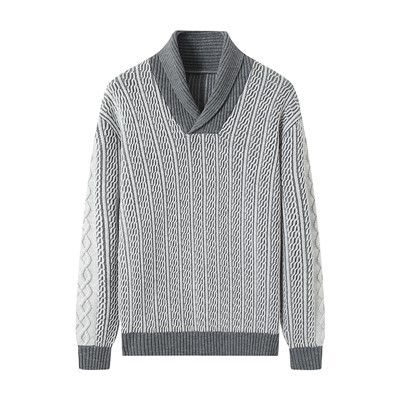
Custom OEM & ODM Sweater Manufacturing
Supports:
- Fashion Brands
- Private Label Clothing Brands
- Startup Apparel Businesses
The service combines:
- OEM Manufacturing for owned designs
- ODM Development for faster market entry
And includes:
- Private Label Services
- Custom Sweater Production
- Custom Labels & Packaging
- Bulk Order Support
Ideal for:
- Retail Fashion Programs
- Wholesale Apparel Distribution
- Multi-SKU seasonal collections
It helps solve three major sourcing challenges:
- Reducing supplier coordination workload
- Enabling brand-aligned packaging without third-party vendors
- Maintaining quality consistency across different MOQ levels
FAQ
What is the difference between OEM and ODM knitwear manufacturing?
OEM manufacturing follows the buyer's design specifications, while ODM manufacturing uses designs developed by the manufacturer that can be customized for branding.
Which option is better for a new fashion brand, OEM or ODM?
ODM may help reduce development time, while OEM offers greater control over product design and brand differentiation.
Conclusion
Choosing between OEM and ODM knitwear manufacturing isn't about picking one model - it's about matching your brand's current stage, resources, and growth plan to a service structure that supports scalability without compromise.
Whether you're launching your first collection or scaling a Retail Fashion Program, clarity on customization scope, process transparency, and MOQ terms defines long-term sourcing success.
Learn More About Manufacturing Options to compare workflow fit across your product categories.